
Prof. Dr. Stefan DECKER
Managing Director of Fraunhofer FIT; RWTH Aachen, Germany
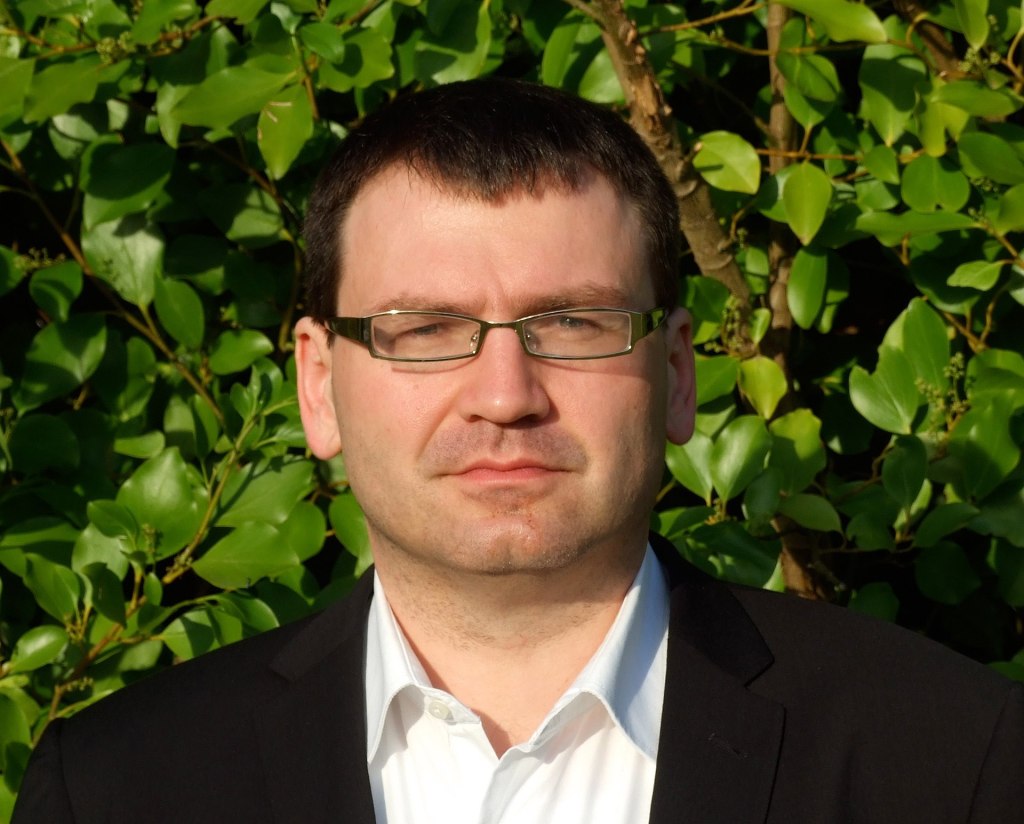
“Contributing to the Digital Transformation with ChatGPT and LLMs”
About Stefan Decker
Stefan Decker, a Professor of Information Systems and Databases at RWTH Aachen, has been leading the Fraunhofer Institute for Applied Information Technology (FIT) since 2015. His research interests encompass the Semantic Web, Linked Data, and Knowledge Graphs, along with application areas such as Data Spaces, Open Data, Online Privacy, and Research Data Management.
He earned his graduate degree in computer science and mathematics from the University of Kaiserslautern, and his doctoral degree from Karlsruhe University. He has held various positions, including a research fellowship at Stanford University for three years, a five-year tenure as a Research Assistant Professor at the University of Southern California, and a Full Professorship in Digital Enterprise at the National University of Ireland, Galway. Additionally, he served as the Director of the Digital Enterprise Research Institute (DERI) and later Site Director of the Insight Centre for Data Analytics in Ireland.
Prof. Dr. Björn-Ola LINNÉR
Linköping University, Sweden

“The geopolitics of AI in the global sustainability transformations”
AI is expected to play a key role in societal transformations toward the sustainable development goals through enhanced data-analysis, greater amounts of quantitative knowledge, and by making economic and social activities less wasteful and more energy-efficient. In particular, international organisations have high expectations on AI for delivering sustainability aspirations beyond the 2030 Agenda. A number of challenges have also been identified: ethics, human rights, cybersecurity, geopolitical competition, access to reliable data, transparency and the digital gap. The solutions discussed in international organisations are primarily multi-stakeholder collaboration, cohesive but flexible governance frameworks, but also taking the lead to push for ethical, value-based, and sustainable AI. The talk will address the geopolitical challenges for AI governance in international collaborations on global sustainability transformations.
About Björn-Ola Linnér
Björn-Ola Linnér is professor in Environmental Change at the Centre for Climate Science and Policy Research at Linköping University, Sweden. Currently, he is a Visiting Fellow at the Graduate Institute of International and Development Studies in Geneva. He is the programme director for Mistra Geopolitics, a major research programme analysing the dynamics between sustainable development and a changing geopolitical landscape. His research focuses on transnational governance on climate change and sustainable development goals, as well as on societal transformations toward sustainable development.
He is also a Stockholm Environment Institute (SEI) Associate, an associate Senior Fellow at Stockholm International Peace Research Institute (SIPRI) and an associate research fellow at the Institute for Science, Innovation and Society (InSIS) at Oxford University.
Recent books include the second revised edition of The Return of Malthus: Environmentalism and the Post-war Population–Resource Crises (Whitehorse Press, 2023) and the co-authored Sustainability Transformations: Agents and Drivers across Societies (Cambridge University Press, 2019) and The Political Economy of Climate Change Adaptation (Palgrave McMillan, 2015).
Prof. Dr. Fosca GIANNOTTI
Scuole Normale Superiore, Italy

“The individual and social dimensions of human-centered AI”
The future of AI lies in enabling people to collaborate with machines to solve complex problems. Like any efficient collaboration, this requires good communication, trust, clarity, and understanding. On the other side, this also reveals a social dimension of AI, as increasingly complex socio-technical systems emerge, made by interacting people and intelligent agents. The lecture will address the individual and social dimensions of such collaboration with a focus on: 1) “Explainable AI”, providing a reasoned introduction to the work and the research challenges to the work of Explainable AI for Decision Making (XAI). A special focus will be on mechanisms to improve joint performance in high-stake decision-making such as methods aimed at engaging users with factual and counterfactual or other high-level explanations encoding domain knowledge and user background, methods focusing on conversational explainable AI and methods aimed at understanding the impact of explanation on expert users’ information-seeking strategies, mental model updating, and trust calibration; 2) the (undesired) emerging network effects of social AI systems and the design of transparent mechanisms for decentralized collaboration and personal data ecosystems that help achieve desired aggregate outcomes, i.e., the realization of the agreed set of values and objectives at collective levels, such as accessible urban mobility, diversity, pluralism, fair distribution of economic resources, environmental sustainability, a fair and inclusive job market.
About Fosca Gianotti
Fosca Giannotti is professor at Scuola Normale Superiore, Pisa and associate at the Information Science and Technology Institute “A. Faedo” of CNR., Pisa, Italy. She co-leads the Pisa KDD Lab – Knowledge Discovery and Data Mining Laboratory, a joint research initiative of the University of Pisa and ISTI-CNR.
Her research focuses on using AI and Big data for understanding complex social phenomena: human mobility, social behavior and advancing AI methods on trustworthiness and human interaction. She is the PI of the ERC project “XAI – Science and Technology for the Explanation of AI Decision Making”.
She is author of more than 300 papers. She has coordinated tens of European projects and industrial collaborations. Professor Giannotti is deputy director of SoBigData++, the European research infrastructure on Big Data Analytics and Social Mining, an ecosystem of tens of cutting-edge European research centers providing an open platform for interdisciplinary data science and data-driven innovation.
On March 8, 2019 she has been featured as one of the 19 Inspiring Women in AI, BigData, Data Science, and Machine Learning by KDnuggets.com, the leading site on AI, Data Mining and Machine Learning https://www.kdnuggets. com/2019/03/women-ai-big-data-science-machine-learning.html. Since February 2020 F.G. is the Italian Delegate of Cluster4 (Digital, Industry and Space) in Horizon Europe.
Dr. Lorenz GRANRATH
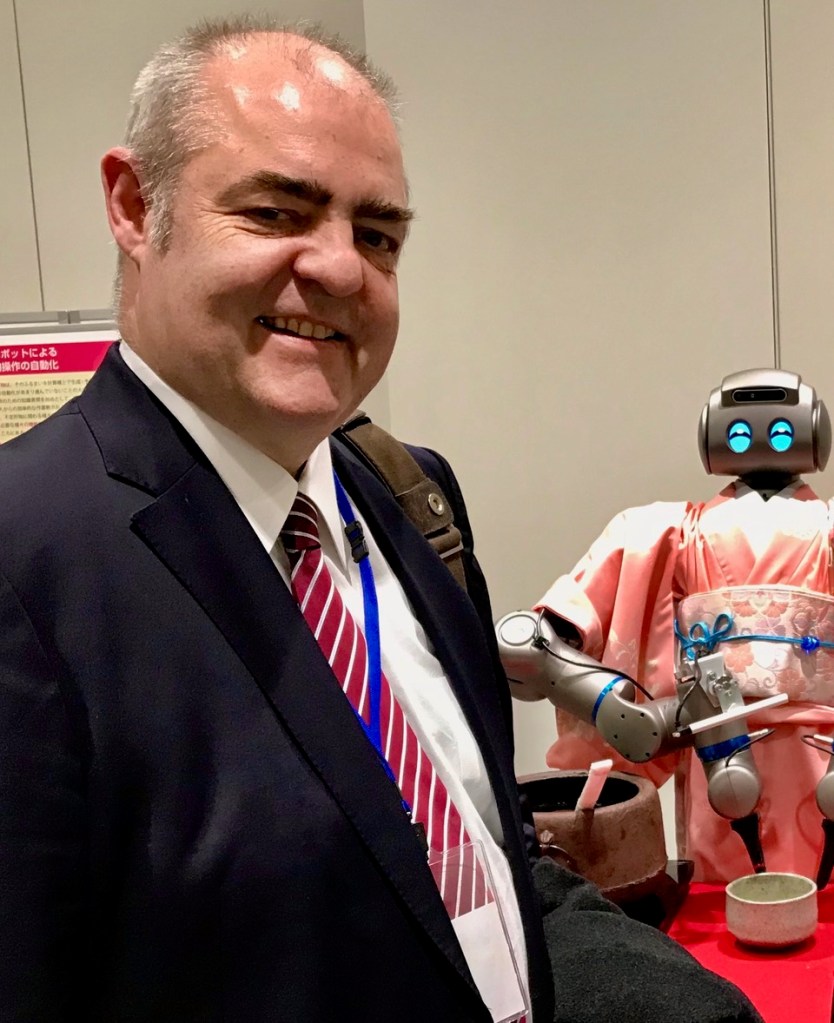
“Navigating the Digital Wave: A Collaborative Course for Japan and Europe”
Currently, changes are occurring in many dimensions, such as tackling environmental problems. Besides that, the digital revolution has transcended beyond the confines of technology and is now reshaping our societies, economies, and cultures. From artificial intelligence to blockchain, from big data to the Internet of Things, the digital tsunami is fundamentally altering how we live, work, and interact.
The Chances
In an era where innovation is the currency of progress, Japan and Europe have the potential to lead the world in technology-driven solutions. Collaboration between our regions can yield groundbreaking advances in industry, healthcare, sustainability, and education. The digital wave offers a chance to not only boost economic growth but also improve the quality of life for our citizens.
The Risks
However, some risks have to be considered, such as cybersecurity threats, privacy concerns, AI ethics, and changes in the labor market, just to name a few. Here, too, we need a collaborative approach to develop robust regulatory frameworks and ethical guidelines to safeguard our digital future.
Actions for Japan and Europe
Collaboration is the key—Japan and Europe should benefit from each other’s strengths and experiences. We must invest in education and workforce development to equip our citizens with the skills needed to thrive in the digital age. Additionally, fostering innovation through public-private partnerships and supporting startups and small businesses can fuel economic growth. Moreover, we need to prioritize the ethical dimensions of technology. Building trust in the digital space should be a top priority. Transparent data practices, strong privacy laws, and ethical AI development can ensure that technology serves humanity and not the other way around.
About Lorenz Granrath
Dr. Granrath has more than 25 years of professional experience in technology transfer from science to industry, industry representation, and initiating events in many fields such as renewable energy, robotics, artificial intelligence (AI), and more. Dr. Granrath started working in production and automation as a consultant and at ABB (Asea Brown Boveri). In 1997, he joined GMD (German National IT Research Center) and coordinated their participation in the Japanese “Real World Computing” project.
In 2001, Dr. Granrath moved to Japan to start the Fraunhofer Representative Office. He made Fraunhofer known and acquired many big Japanese companies as customers, set up a Joint Research Centre with Tohoku University, and initiated many symposia, notably the German-Japanese Solar Day in 2010 supported by both sides’ ministries. In 2014, he changed to AIST (National Institute for Advanced Industrial Science and Technology), later at the AI Research Centre. He initiated many international projects like AI for Autonomous Driving and got AIST involved in a big EU-Japan AI project (e-VITA, a virtual coach for Smart Aging). Besides AIST, he advised several German companies for market entry and provided advice and training in Industry 4.0 / Society 5.0 in Asia. In May 2021, Dr. Granrath became a Project Assistant Professor at Tohoku University, Smart Aging Research Centre (e-VITA), and initiated industry projects/collaborations.
Since June 2022, he has been the Representative of IXP Institute for Experimental Psychophysiology, promoting UX user experience analysis for products.
Dr. Granrath studied at Karlsruhe Institute of Technology (KIT) Industrial Engineering (Dipl.-Wirtschaftsing.) and completed his doctorate at St. Gallen University in Switzerland, specializing in Technology Management in 1994, with a one-year stay at The University of Tokyo.
Dr. Granrath is a member of the Science and Technology Diplomatic Circle of foreign embassies in Japan, a Board Member of the Heidelberg Club International Japan Chapter, a member of the German Chamber of Commerce and Industry in Japan (DIHKJ), and a member of the Japan Society for Artificial Intelligence.
Prof. Dr. Yuko HARAYAMA
Professor Emeritus, Tohoku University, Japan

“How to frame the interplay between Artificial Intelligence (AI) and society?“
Every day, we are discovering and experiencing the transformative power of Artificial Intelligence (AI). Behind what became routine practices, such as using search engines, clicking buttons to buy services and goods, or checking the precise weather forecast, AI systems are deployed in the back office, assisting and facilitating our decision-making.
What we know is that AI systems are already embedded in everyday life, but what we do not know yet is how this transformative power will shape our society, with its benefits, and potential and unknown risks. How to better prepare our future with AI? Who should act and how to ensure the responsible development and use of AI? Many debate and policy discussions are already in place at the national, regional and international level, with different approaches, from a high-level of abstraction to more practical guidelines, preference for regulation or voluntary commitment, but it is quite difficult to navigate within these differences.
In my presentation, after a brief overview of AI governance issues, I will focus on the work of the Commission on AI (CAI), at the Council of Europe, my tentative being to guide the discussion on the interplay between AI and society.
Prof. Dr. Ichiro ICHIMARU
Kagawa University, Japan
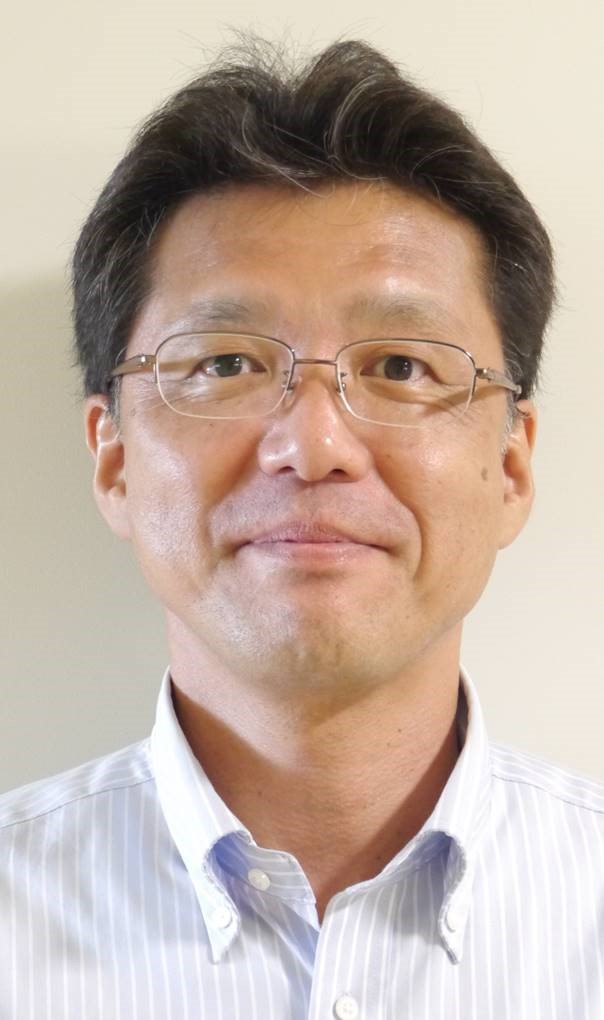
“Mid-infrared passive spectroscopic imaging for healthcare sensors, infrastructural and agricultural monitoring”
We aim to realize the casual monitoring of the healthcare system with infrared rays. The mid-infrared passive spectroscopic imaging device, built into an AI speaker, measures the blood glucose levels of several people around a dining table simultaneously. Smartwatches are effective methods for wearable health monitoring devices. However, elevated blood glucose levels are a concern about an hour after eating when people are not wearing their watches. Therefore, blood glucose levels are measured from spectral intensities by extracting human regions, such as the face and arms, from images observed from a distance. Individual blood glucose data are managed on the web, and dietary advice can be announced from AI speakers. For outdoor activities, smartwatches are used to measure blood glucose levels and manage integrated health data on the web.
We propose the new method for measuring blood glucose levels in bodies by passive spectroscopic imaging of mid-infrared light emitted from body heat. Thermal imaging cameras so-called thermography, what convert mid-infrared light intensity into temperature based on Planck’s law, display heat images. We had successfully developed the mid-infrared passive spectroscopic imaging system using an uncooled microbolometer array sensor. By the passive spectroscopic imaging of mid-infrared light emitted from human bodies, we had successfully detected specific glucose-induced emission peaks whose wavelength were 9.25 and 9.65 µm.
Furthermore, the proposed method had been developed into the pea-sized line one-shot spectral imager that could be mounted on a smartphone. This system consists of only three small optics, an objective lens, a relative-inclined phase shifter and a cylindrical imaging lens whose diameter are about 5mm. In the future work, we will realize the continuous glucose monitoring device built into AI speakers and smartphones.
About Ichiro Ishimaru
Ichiro Ishimaru received the B.S. degree in Mechanical Engineering from Osaka University, Japan, in 1987, and then the Doctor of Engineering from the University of Tokyo, Japan, in 1999. He joined the Production Engineering Research Laboratory in Hitachi Corporation from 1987. He is a professor of the Department of Intelligent Mechanical Systems Engineering, Faculty of Engineering in Kagawa University from 2008. His main works is the spectroscopic imaging for medical healthcare or environmental measurement or artworks. He received the 2017 21st Century Invention Encouragement Award, Japan Institute of Invention and innovation, ISOT (The International Symposium on Optomechatronic Technology) 2012 Innovation Award etc. He is a member of The Optical Society of Japan and SPIE.
 ejea.eu